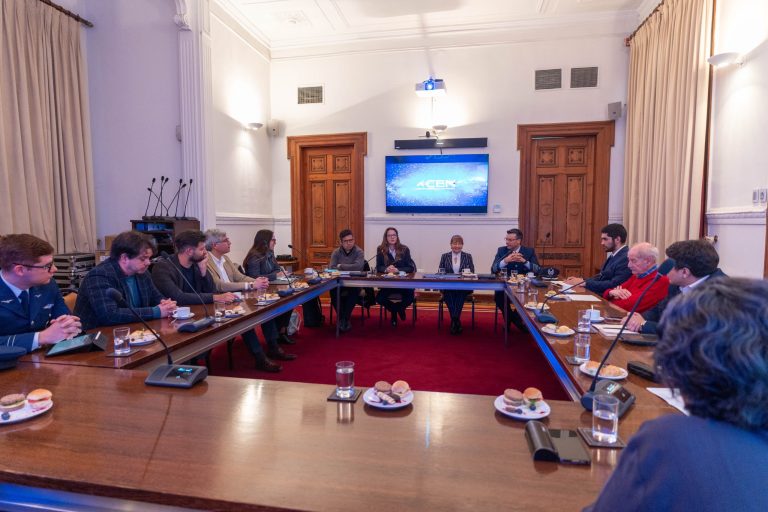



This Wednesday, at La Moneda Palace, the Ministers of the Interior and Public Security, Carolina Tohá, and of Science, Technology, Knowledge and Innovation, Aisén Etcheverry, presented the new Expert Commission on Quantum Technologies, whose mission will be to prepare a report with 15 recommendations to guide public policies in this field within 120 days.
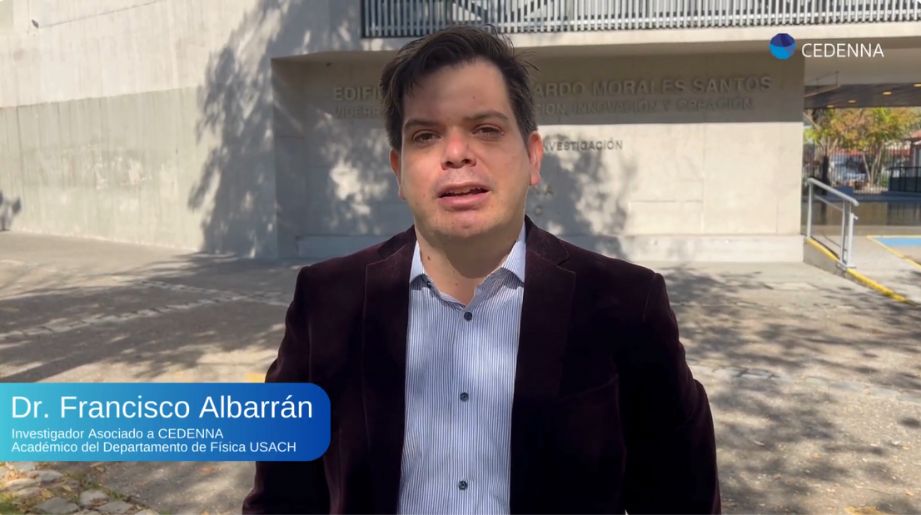
Among the eight experts on this advisory body is Dr. Francisco Albarrán, CEDENNA associate researcher and academic at the Department of Physics of the Universidad de Santiago
.
His main areas of interest are quantum computing, machine learning, superconducting circuits, quantum technologies, quantum memristors and quantum control, and he maintains collaborations with foreign universities and companies. He has published numerous scientific articles in recognized journals and has taken part in international conferences and workshops.
“I think it is very positive that Chile is implementing policies focused on cutting-edge technologies. Now we will be working on quantum technologies, and in the future this could expand to robotics, artificial intelligence and other fields. It is essential for Chile to develop policies in these areas to assess how they can impact the country and how, in turn, Chile can contribute to the development of these advanced technologies,” said Dr. Albarrán.
He added that “as a member of the commission, I feel a deep responsibility to contribute significantly to the country. It is essential to ensure that resources are used efficiently and to create opportunities for existing human talent and for future generations. We face the challenge of having many specialized professionals without jobs. Therefore, any initiative that encourages job creation seems excellent and necessary to me”.
At the opening ceremony of this expert working group’s activities, the Minister of the Interior and Security, Carolina Tohá, praised the initiative and stressed that with it the Chilean State is anticipating the challenges and opportunities its application represents in different areas, such as public security. «It is important to prepare for the day when quantum takes on a more prominent role. That is not on the distant horizon, but quite imminent, and coincides with the moment our Government begins to implement the Cybersecurity Law,” explained the Chief of Cabinet.
“We are working closely with the Ministry of Science on several initiatives to gradually incorporate advances, technologies or artificial intelligence devices into different public policies. This commission and the recommendations that may come out of it can be a contribution in many dimensions, based on all the potential of quantum technology,” stressed Tohá, adding that from a public security perspective “there is a very important focus on cybersecurity issues, because there are opportunities there, but what we see as most imminent today is the importance of addressing the associated risks”.
For her part, the Minister of Science, Technology, Knowledge and Innovation, Aisén Etcheverry, explained the importance of this commission: “Around the world, countries that do not have a quantum technologies strategy will be left out, because its developments promise to bring exponential changes in industries such as finance, pharmaceuticals, new materials development, disease detection and many others. It is key, then, to keep pace with other countries, especially because we are highly connected with the rest of the world. A fundamental area is cybersecurity: we need to build capabilities to take advantage of the possibilities this technology opens up, but also to protect ourselves when quantum computing advances to the point of being able to break any key or protection system”.
“Another key issue follows from this: developed countries are creating much more sophisticated cybersecurity standards to deal with quantum, and if, as a country, we are not at that level, we will lose the collaboration opportunities we have today in different industries,” said Minister Etcheverry.
About the Commission and its members
It is made up of eight experts who, within 120 calendar days from today’s first session, must deliver to the Ministry of Science, Technology, Knowledge and Innovation a report with 15 recommendations to guide public policies in this field of technological innovation.
● Francisco Albarrán, CEDENNA researcher and representative of the Universidad de Santiago de Chile.
● Stephen Walborn, representative of the Universidad de Concepción.
● Dardo Goyeneche, representative of the Pontificia Universidad Católica de Chile.
● Carla Hermann, representative of the Universidad de Chile.
● Claudio Torres, representative of the Universidad Técnica Federico Santa María.
● Aldo Delgado, director of the Millennium Institute for Research in Optics (MIRO).
● Paulina Assmann, CEO and co-founder of SeQure Quantum.
● Sabina Torres Figueroa, representative of the Ministry of the Interior and Public Security.
Source: CEDENNA and Ministry of the Interior Press Office
Photo: Courtesy of the Ministry of the Interior