


The second session of the CEDENNA Seminar Series addressed how nanotechnology can contribute to safe food production by reducing the amount of fertilizers and pesticides used in the fields, and, from the nanosafety perspective, the importance of considering the impact nanomaterials can have on soils and plants.
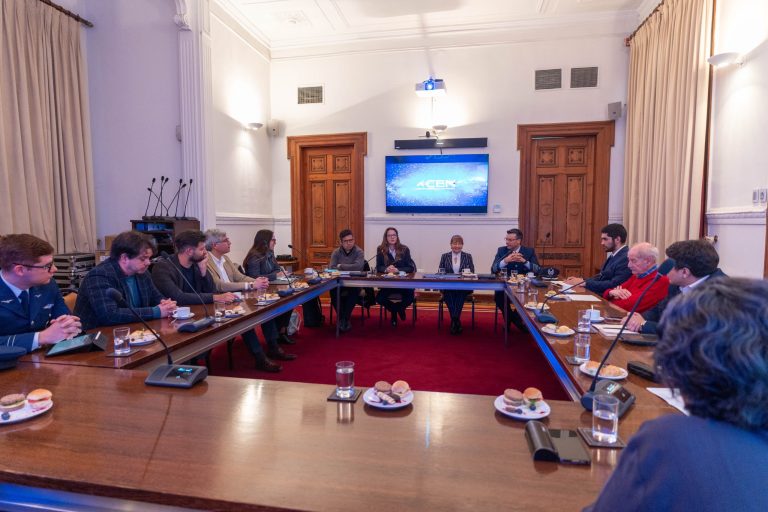
The session took place in the auditorium of the REMS Research Centers Building, with researchers and students from the center who actively participated with questions and comments after the presentations by Drs. Mauricio Escudey (CEDENNA) and Rafael Freire (Agricultural Research Institute, INIA).
In his talk, Dr. Freire explained how nanotechnology can help reduce the amount of inputs used in agriculture, such as fertilizers and pesticides, which, although intended to increase yields, can also affect food safety and the environment.
Then, in order to exchange ideas with the audience, Dr. Escudey began his presentation with the question: How are soil and water affected when manufactured nanomaterials are applied? The researcher noted that “there are direct and indirect impacts. The former are products developed to be applied directly to soil or plants, such as nanofertilizers, nanopesticides and nanoremediation; the indirect impacts, on the other hand, come from products used for various purposes that end up in soil or water, such as nanoplastics.
“The most significant issue is the lack of basic knowledge to cover a wide range of potential problems. The long-term behavior of nanomaterials in the environment and in soils is unknown; nanomaterials could contribute to the spread of contaminants or to accumulation, with risks to the food chain,” he said.