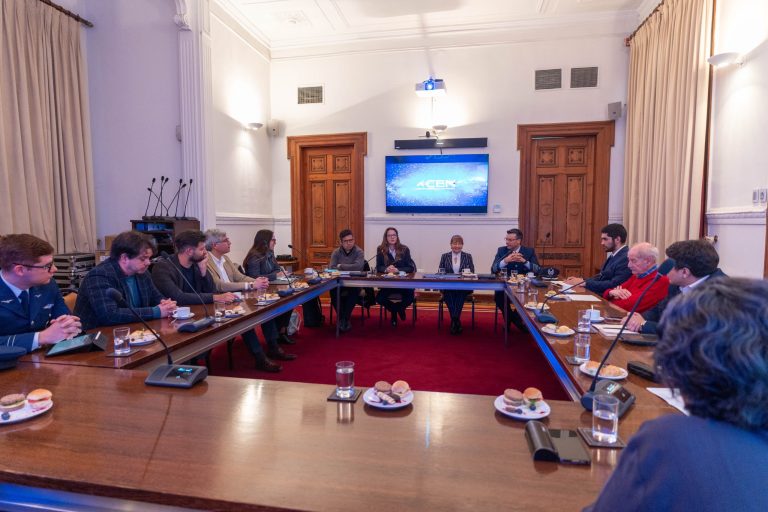



An interesting day took place at the country’s largest nanoscience and nanotechnology center, CEDENNA (Center for the Development of Nanoscience and Nanotechnology), with the visit of the Minister of Mining, Marcela Hernando, who toured some of its laboratories and learned directly from the researchers about some of the nanotechnology developments being carried out there for the mining sector.
“CEDENNA is an institution that is unique, not only in the country but in Latin America, in terms of the technological developments it is carrying out, and in that context, today I was able to learn about some of them, essentially those related to mining, some to do with lithium, others with other minerals, and sensors for large-scale mining equipment,” said the Minister.
CEDENNA’s director, National Prize in Sciences winner Dora Altbir, said that “from the point of view of the science and technology we develop at our center, it seemed tremendously relevant to have the Minister of Mining at our facilities, to show her what we can do from Chile and how Chilean science is capable of solving problems of interest to different sectors of our country, such as mining.”
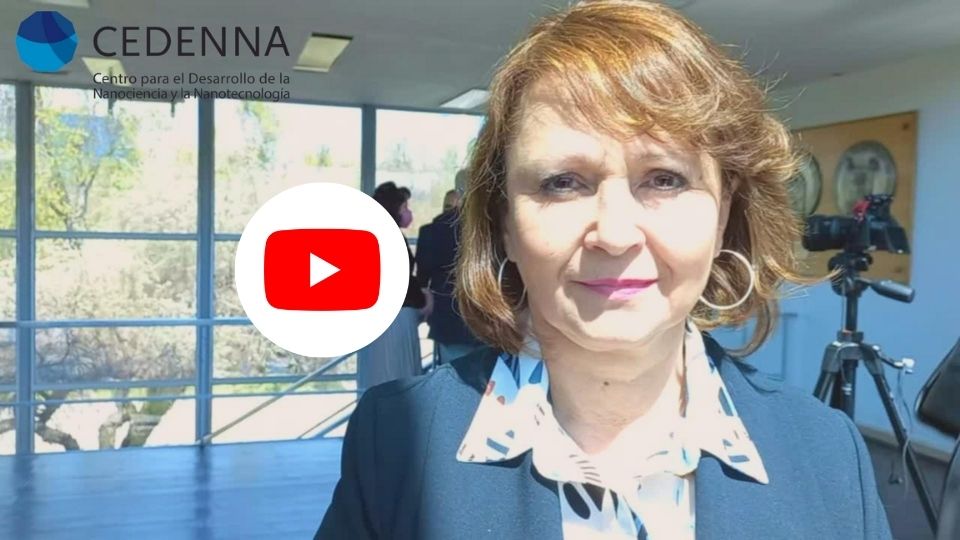
We invite you to watch the following video with the minister’s impressions after her visit:
Sensors for mining
Among the developments Minister Hernando learned about are sensors for mining. One of them, called the SIget system, detects uncrushables in real time, one of the sector’s main problems, a solution representing potential savings of 200 to 400 million dollars a year for Chilean production and up to 3 billion dollars a year for international production.
It is a technology essentially dedicated to GETs (Ground Engaging Tools), the wear elements that protect shovel buckets and that, during operation, sometimes suffer impacts that break their supports and end up detaching unintentionally.
When a detachment occurs, the SiGET system issues an alert, so the wear element does not end up in the crusher, avoiding damage and unscheduled stoppages. This project aims to give the operator an instant, real-time warning of tooth detachment while simultaneously generating an alert in “Dispatch”. In this way the operator, and anyone else at the site, can know promptly which tooth was lost and carry out rapid maintenance.
The second sensor (BWear system) is applied to monitoring bushing wear and makes it possible to optimize their service life, making the most of their performance. Mining operations are extremely harsh and materials wear out, particularly bushings. This wireless monitoring system measures the wear level of these parts, also in real time, and makes it possible to optimize their service life by planning their replacement efficiently and in a timely manner.
The sensing system can be marketed for mining in Chile, but clearly also for other predominantly mining countries, such as Peru, Australia, Canada and South Africa.
“Challenges for women in STEM in Chile”
The visit concluded with a meeting called “The challenges of women in STEM in Chile”, attended by the center’s female researchers, professionals, technicians and students.
“It was also very important to learn about her experience, how a woman had joined such a complex field as mining, to hear her story and share women’s experiences in science and strategies to bring more women into science and, of course, more women into mining,” highlighted Dr. Altbir.
At the end of the day, the Minister commented that “it was very interesting to hear the speech of the center’s director, who is also a PhD and a physicist, and her experience as a woman who is now leading this is very similar to what one has had in other spheres. It is very important to talk about public policies to promote the integration of women not only into these careers and this type of development, but also into industry. In mining we are very far behind on this and we are still well below 20%. We have big goals to meet before 2030 to achieve greater participation and we are strongly encouraging women to join at all levels, starting with management.”
Finally, she recalled that there is an open invitation to women in science: “we have work we are doing on women and mining together with the ministries of Labor and Women. We are also inviting all these women scientists to take part, as they can contribute enormously with their experience, and also specifically in education, in advancing towards challenging goals.”