


The encyclical Magnifica Humanitas by Pope Leo XIV holds that the future development of artificial intelligence (AI) is not neutral and calls for urgent ethical discernment to prevent it from becoming an instrument of domination or exclusion. A group of CEDENNA researchers is working to bring these advanced technologies into the classroom.
The “Espectro Sonido 2026” (“Sound Spectrum 2026”) plan seeks to bring part of this research to secondary schools in Puente Alto so that students can understand how to use algorithms and AI for the benefit of their community.
“Just as we have learned to recognize the serious effects of air pollution, it is essential to incorporate the most advanced technological tools to understand noise pollution from that same preventive perspective,” says Dr. Francisco Muñoz, of the Physics Department at the University of Chile.
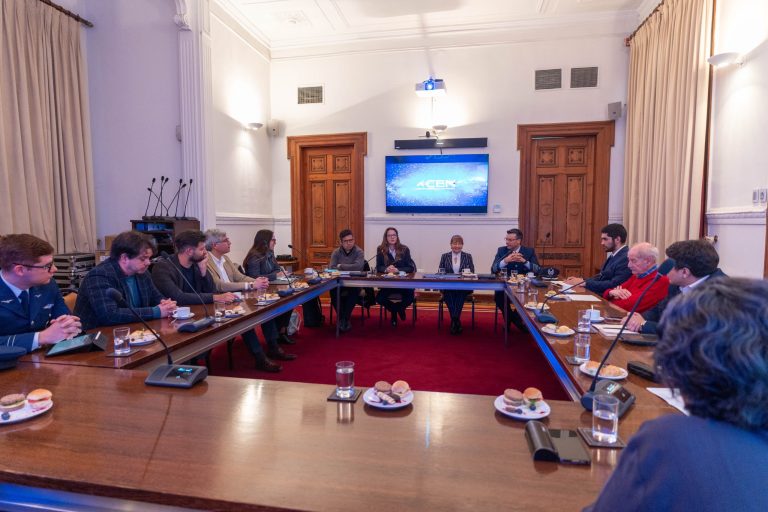
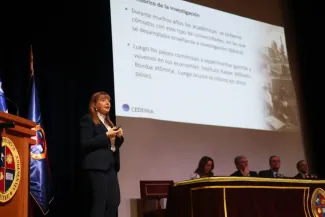
Together with CEDENNA researchers Carlos Cárdenas and Javiera Cabezas, he is leading an awareness campaign among secondary school students, encouraging them to explore and use the best technological tools to measure the impact noise has on our mental and physical health. They have already spent more than a year visiting different schools, “thanks to the teams we have formed between CEDENNA, the faculty, and the Municipal Corporation to share the workload.” Specifically, Javiera Cabezas, who recently completed her PhD at CEDENNA, and Macarena Bravo, a member of the Municipal Corporation, played key roles in connecting students with the research, showing them that it is possible and much easier than they think.
“Our plans include systematizing these activities so that they continue and improve over time, and actively linking physics with the development of artificial intelligence models. I’m not talking about using ChatGPT or another chatbot, but about understanding algorithms and influencing how they are used to solve a specific physical challenge. This plan was inspired by the encyclical Magnifica Humanitas. Learning how algorithms work won’t just help their future careers; it will help them become more human, by demystifying technology,” he concludes.
A quieter city is a friendlier environment and a healthier community for everyone. But having students engage with frontier science and learn to use it is a gain for the country’s future.