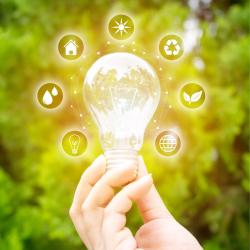
Specialized technology services

We provide advanced characterization, analysis, evaluation and nanosafety capabilities.
Transfer and innovation

We connect scientific capabilities with challenges from companies, public institutions and other actors to develop and transfer impactful solutions.

Technological Development

We convert scientific knowledge into technologies, prototypes, and solutions with potential for application.

Investigación de frontera

Generamos conocimiento de vanguardia en nanociencia y nanotecnología.

Nanobiomedicine

Renewable Energies

Energy

Renewable Energies studies the generation, storage, and transport of clean energy.

These topics will be addressed from a fundamental standpoint, as well as initial developments related to biogas, catalysts that facilitate hydrogen generation, hydrogen transport, new materials for lithium batteries and fuel cells, among others.

Group Leader
Chemistry and Nanoenvironment

Magnetic Nanostructures and Mining

Packaging and Food Safety

Packaging

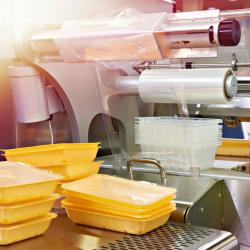
The research line in Packaging and Food Safety develops new packaging materials with improved physical-mechanical and barrier properties, thereby ensuring the quality of packaged products and, specifically in the case of food packaging, extending shelf life while maintaining food quality.

To achieve this goal, packaging with antimicrobial and antioxidant properties, and ethylene absorption capacity, is being developed using nanotechnology as a tool to incorporate functionality into the packaging materials developed. The packaging research line, with an eminently practical focus, also analyzes the behavior of food packaged in the newly developed structures. In this area, plastic materials with antifungal capacity (incorporating natural or synthetic agents) have been developed for packaging salmon, bakery products, meat products, and berries. These technologies are available to the national industry for incorporation into production processes.

Another of the main lines of work in the packaging area is focused on improving the mechanical and barrier properties of biodegradable/compostable plastic materials, without losing their biodegradability properties, by incorporating nanostructures that do not affect the biodegradability, disintegration, and ecotoxicity of the materials. In this field, it should be noted that three laboratories have been set up (a biodegradability laboratory, a compostability laboratory, and an ecotoxicity laboratory) which, in accordance with international standards, make it possible to determine these properties in the different packaging materials.

The new requirements of the extended producer responsibility law, which requires each industry to recover the value of the packaging waste it places on the market, has led the packaging area to open a new line of work involving post-consumer recycled plastic materials. For these materials, the maximum percentages of post-consumer recycled plastic that can be incorporated into the development of new packaging are being determined, as well as the incorporation of nanostructures to ensure the mechanical properties required to fit production processes. At the same time, in order to ensure the chemical safety of the new packaging, functional barriers are being developed to limit the migration of components from the packaging to the packaged food. The laboratory has made available to the industry the “challenger test” trials, which make it possible to guarantee chemical safety and ensure the use of post-consumer recycled plastic material for direct contact with food.

Group Leader

Simulations

Volver al inicio