



Packaging and Food Safety
Group Description
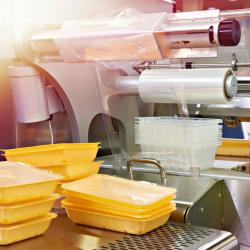
The Packaging and Food Safety research line develops new packaging materials with improved physical-mechanical and barrier properties in order to guarantee the quality of packaged products and, specifically in the case of food packaging, to extend shelf life while maintaining food quality.
To achieve this goal, packaging with antimicrobial and antioxidant properties and ethylene absorption capacity is developed, using nanotechnology as a tool to add functionality to the packaging materials developed. The packaging research line, with an eminently practical focus, also analyzes the behavior of foods packaged in the new structures developed. In this field, plastic materials with antifungal capacity (incorporating natural or synthetic agents) have been developed for packaging salmon, bakery products, meat products and berries. These technologies are available to national industry for incorporation into production processes.
Another of the main lines of work in the packaging area is focused on improving the mechanical and barrier properties of biodegradable/compostable plastic materials, without losing their biodegradability properties, by incorporating nanostructures that do not affect the biodegradability, disintegration, and ecotoxicity of the materials. In this field, it should be noted that three laboratories have been set up (a biodegradability laboratory, a compostability laboratory, and an ecotoxicity laboratory) which, in accordance with international standards, make it possible to determine these properties in the different packaging materials.
The new requirements of the extended producer responsibility law, which requires each industry to recover the value of the packaging waste it places on the market, has led the packaging area to open a new line of work involving post-consumer recycled plastic materials. For these materials, the maximum percentages of post-consumer recycled plastic that can be incorporated into the development of new packaging are being determined, as well as the incorporation of nanostructures to ensure the mechanical properties required to fit production processes. At the same time, in order to ensure the chemical safety of the new packaging, functional barriers are being developed to limit the migration of components from the packaging to the packaged food. The laboratory has made available to the industry the “challenger test” trials, which make it possible to guarantee chemical safety and ensure the use of post-consumer recycled plastic material for direct contact with food.