

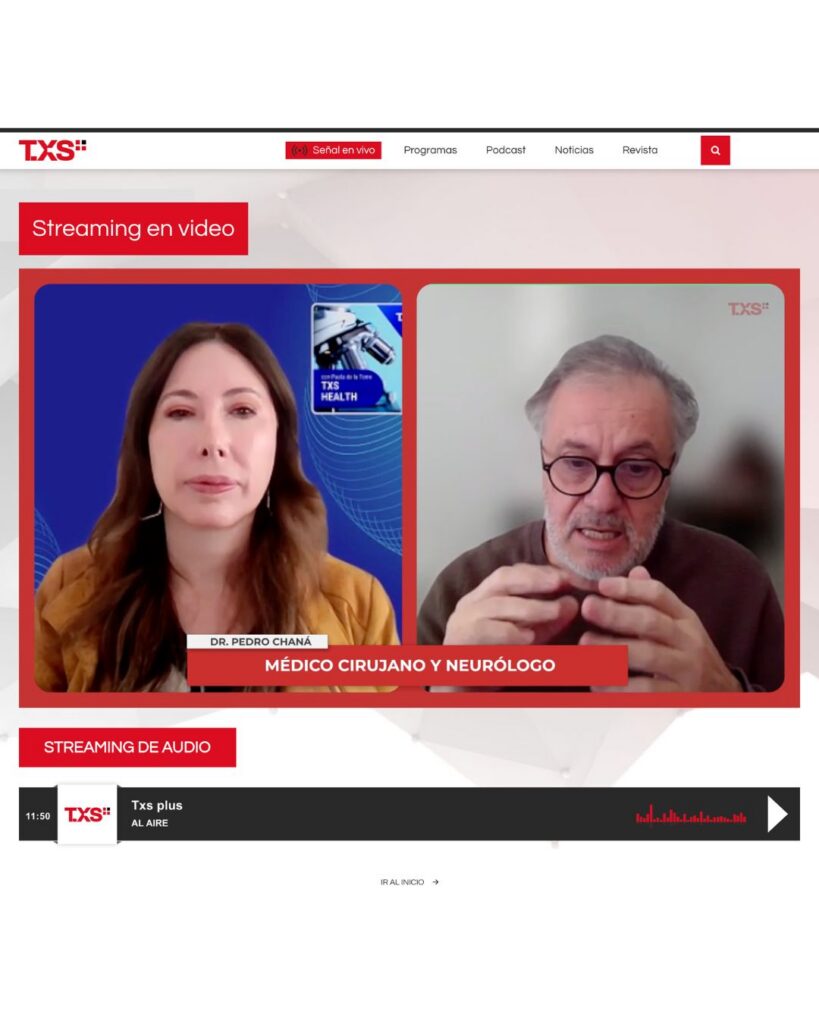
Dr. Pedro Chaná, researcher associated with CEDENNA, director of CETRAM and the CEDENNA–USACH Center Program, took part in TXS+ Health, on the digital channel TXS Plus, where he discussed the advances that are changing the understanding and diagnosis of neurodegenerative diseases such as Parkinson’s and Alzheimer’s.
In the interview, he highlighted the development of a high-sensitivity electrochemical biosensor that he is working on together with Dr. Patricia Díaz, as well as Pablo Jorquera and Álvaro Espejo from the Transfer Laboratory on CEDENNA. The technology seeks to detect biomarkers in blood or tears and pave the way for portable, fast and lower-cost tools to support early diagnosis.
The goal is to move towards a fast, portable, affordable and non-invasive device that can support the early detection and monitoring of patients. This possibility is especially important in diseases such as Parkinson’s and Alzheimer’s, where biological changes can begin many years before clinical symptoms appear.
The development of this biosensor also aims to create a reproducible and scalable prototype, with potential for use in primary health centers and hospitals. It could help expand access to diagnostic tools, especially in areas where specialized equipment is not always available.
Dr. Chaná’s participation in TXS+ Health brought to the public a topic where neurology, nanotechnology and public health converge. It also showed how the research carried out at CEDENNA, an ANID-funded Applied Research Center, seeks to respond to one of the great challenges associated with population aging: detecting earlier, treating better and supporting those facing neurodegenerative diseases with more information.