

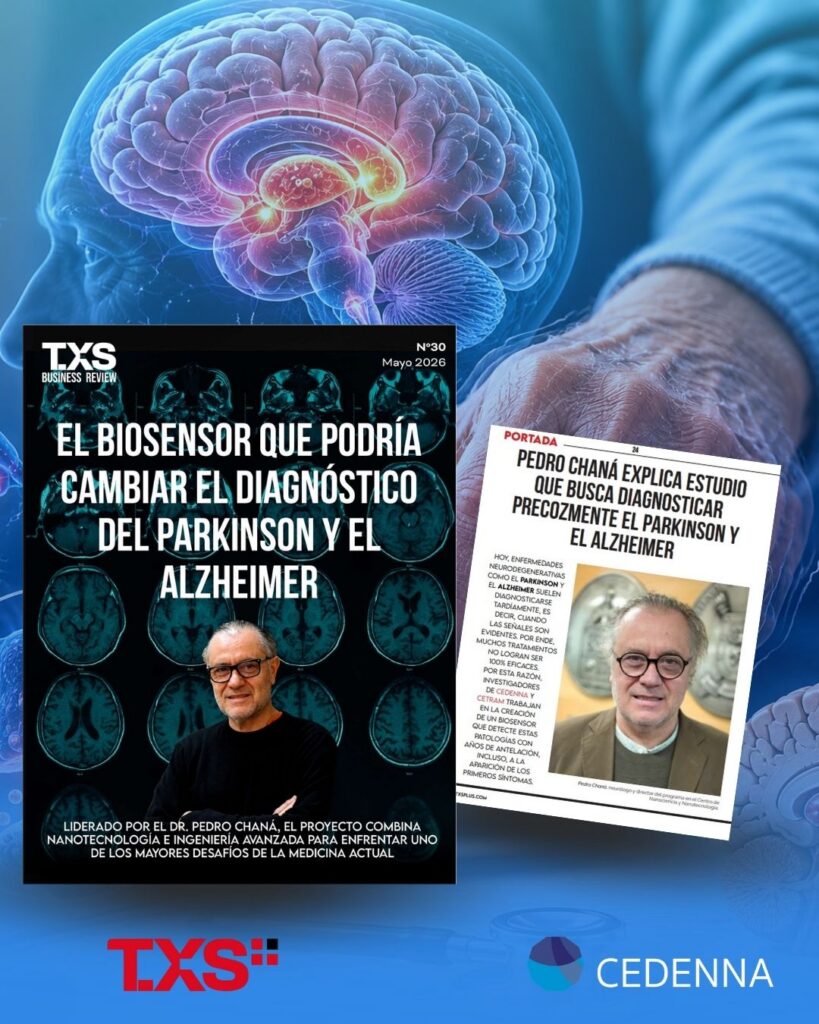
The latest edition of TXS Business Review featured on its cover an innovative research project led by neurologist Dr. Pedro Chaná, developed in collaboration between the Center for Nanoscience and Nanotechnology (CEDENNA), the Universidad de Santiago de Chile (USACH) and the Movement Disorders Center (CETRAM).
In the interview, he highlighted the development of a high-sensitivity electrochemical biosensor that he is working on together with Dr. Patricia Díaz, as well as Pablo Jorquera and Álvaro Espejo from the Transfer Laboratory on CEDENNA. The technology seeks to detect biomarkers in blood or tears and pave the way for portable, fast and lower-cost tools to support early diagnosis.
The initiative seeks to develop a biosensor capable of early detection of neurodegenerative diseases such as Parkinson’s and Alzheimer’s, two conditions that affect millions of people worldwide and whose early diagnosis remains one of the main challenges of modern medicine.
The project combines knowledge from neurology, nanotechnology and biomedicine to design an innovative diagnostic tool that makes it possible to identify biomarkers associated with these diseases at early stages. If realized, this technology could significantly improve opportunities for early intervention, optimize available treatments and support a better quality of life for patients.