
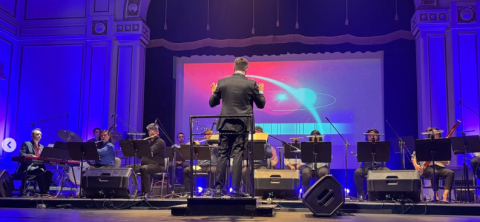
A musical piece inspired by the universe of nanoscience, created especially from the scientific work developed at the Center for Nanoscience and Nanotechnology, CEDENNA, was premiered this Saturday, December 6, at the Cielo 2025 Concert, a free experience that unites music, astronomy and scientific dissemination from an innovative, sensitive and interdisciplinary artistic proposal.
As part of Science Week, organized by the Faculty of Science of the University of Santiago, Chile, the Cielo Concert included two performances open to the community:
- Saturday, December 6, 8:30 p.m. – Aula Magna USACH (registration required)
Thursday, December 11, 8:30 p.m. – Zócalo of the Municipality of Recoleta
A talk on nanoscience will open Saturday's events.
Prior to the concert, the public attended an informative talk especially linked to the concept of the work "Nanomundo", given by the physicist Dr. Juan Escrig, Vice-Rector of Usach, academic of the Department of Physics of USACH and researcher at CEDENNA.
Her presentation, titled “From the cosmos to the nanoworld: exploring the invisible”, addressed how science studies the smallest scales of matter and how this knowledge interacts with other dimensions of the universe, from deep space to the microscopic.
This science outreach block was complemented by talks from:
- Dr. Felipe Elorrieta (USACH): “Big Data and Variable Astronomical Objects.”
- Dr. Alice Zurlo (Diego Portales University): “Exomoons: The Search for Life Beyond Planets.”
The talks preceded the concert on Saturday, December 6, which culminated with the premiere of the cycle of musical works inspired by science.
The nanoworld brought to music and image
In this edition, Chilean composer Pablo Ariel López presented a cycle of four works that intertwine art and science from an emotional and reflective perspective. Among them, the premiere of “Nanomundo” stands out, a composition with Andean sounds inspired by nanoscience research and the book “Images of the Nanoworld” by CEDENNA.
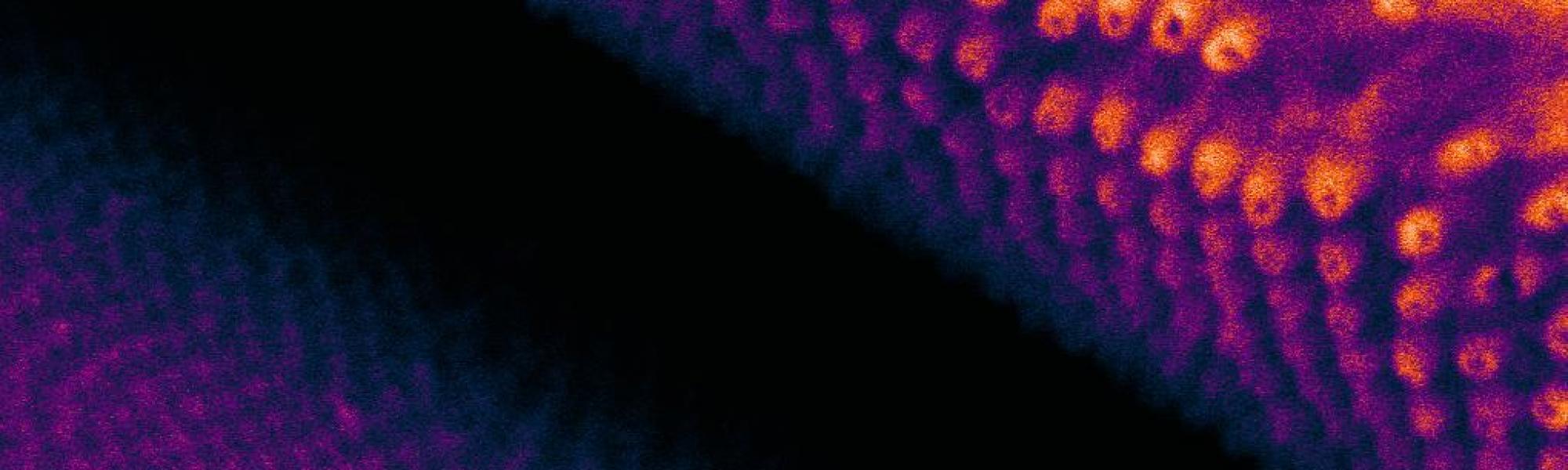
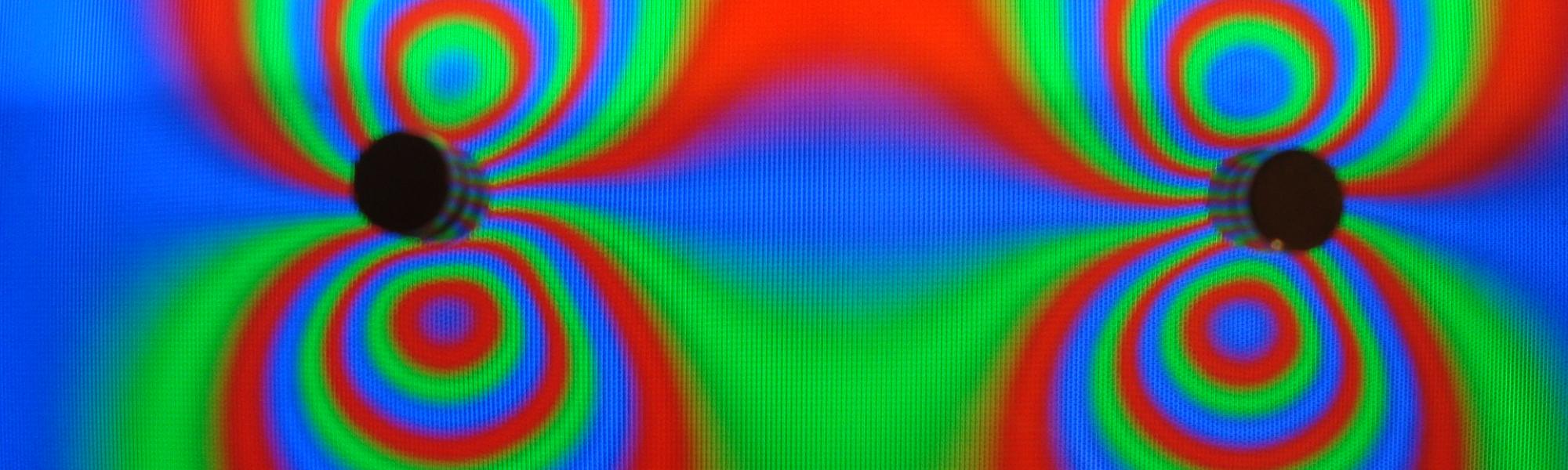
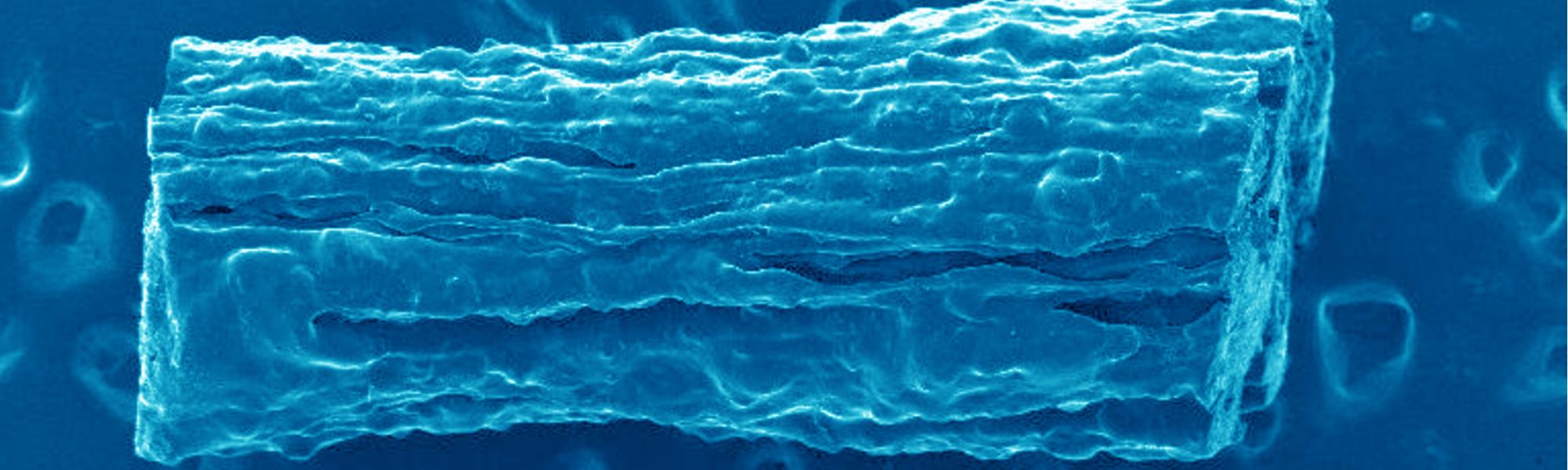
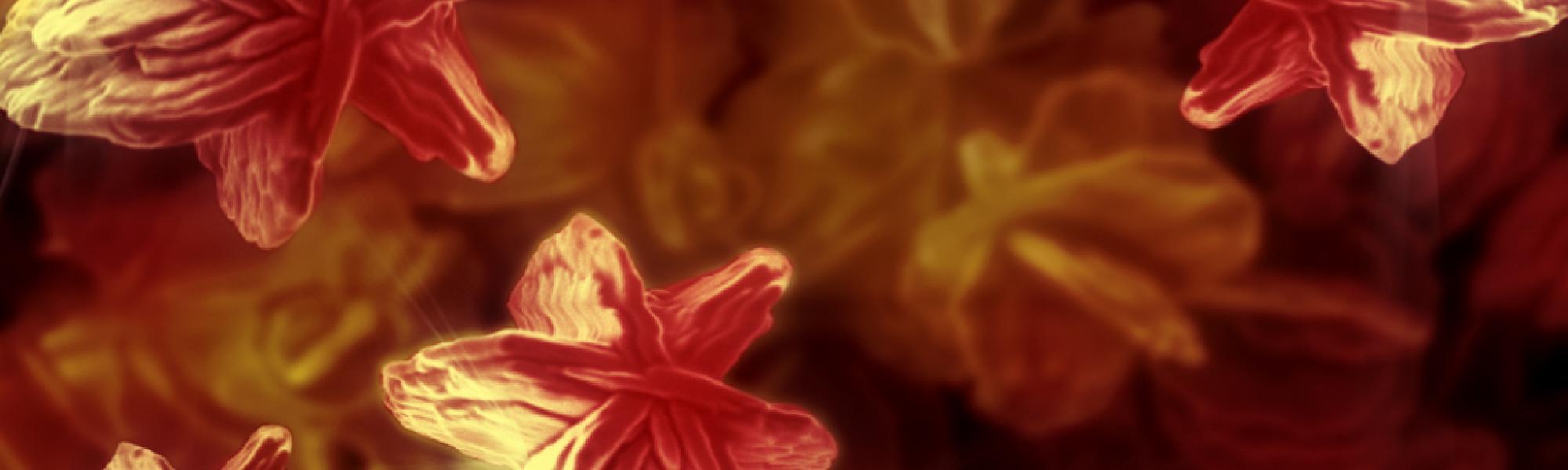
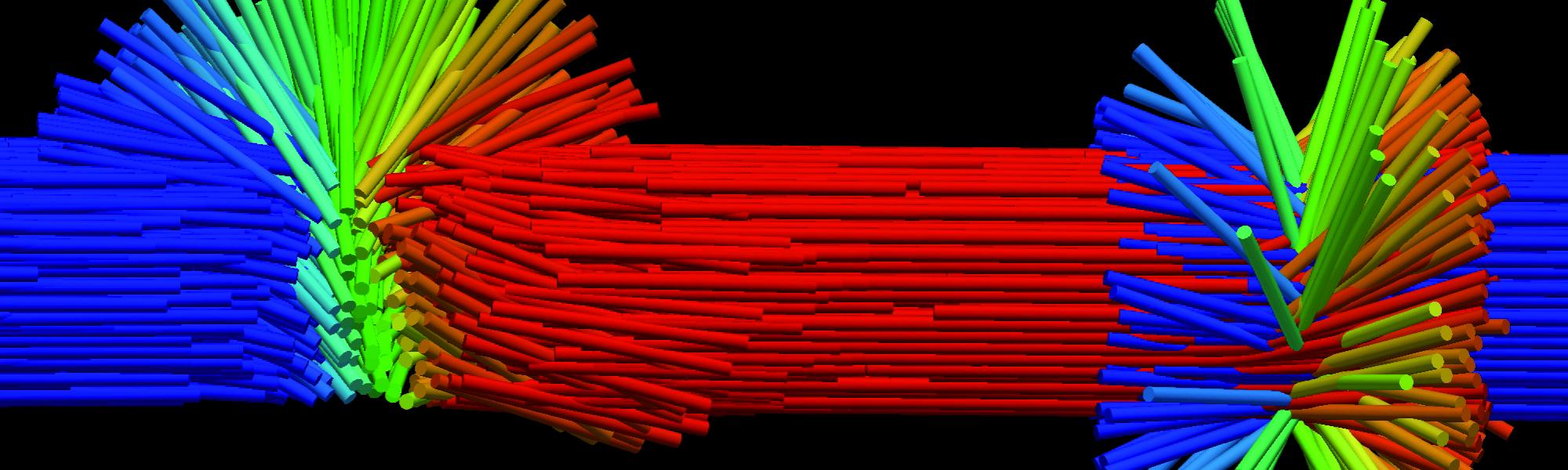
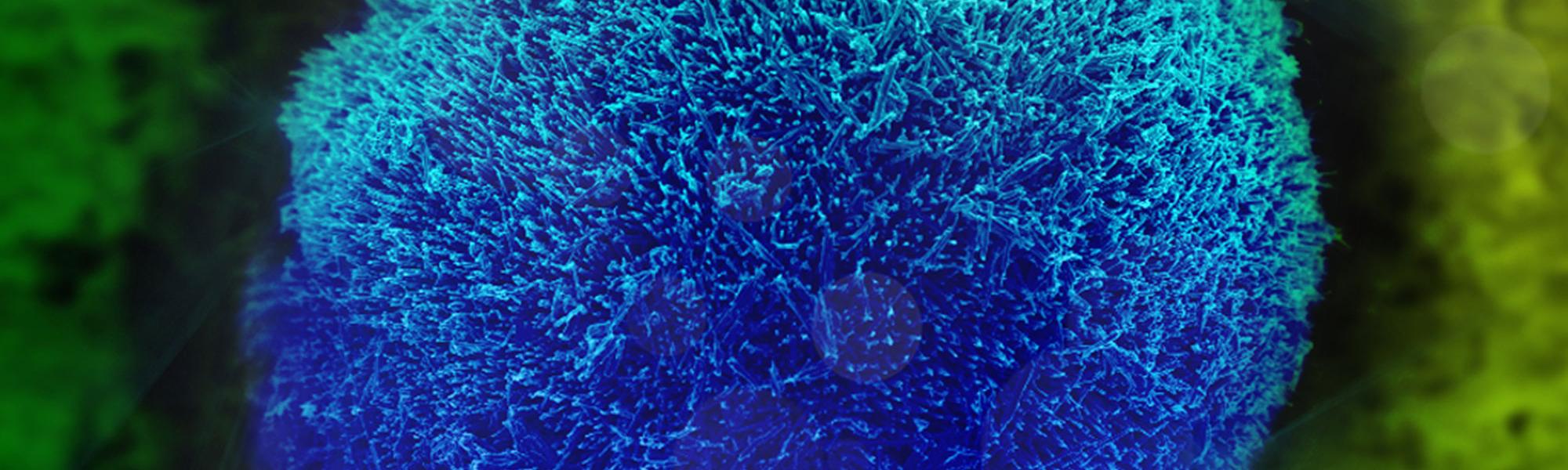
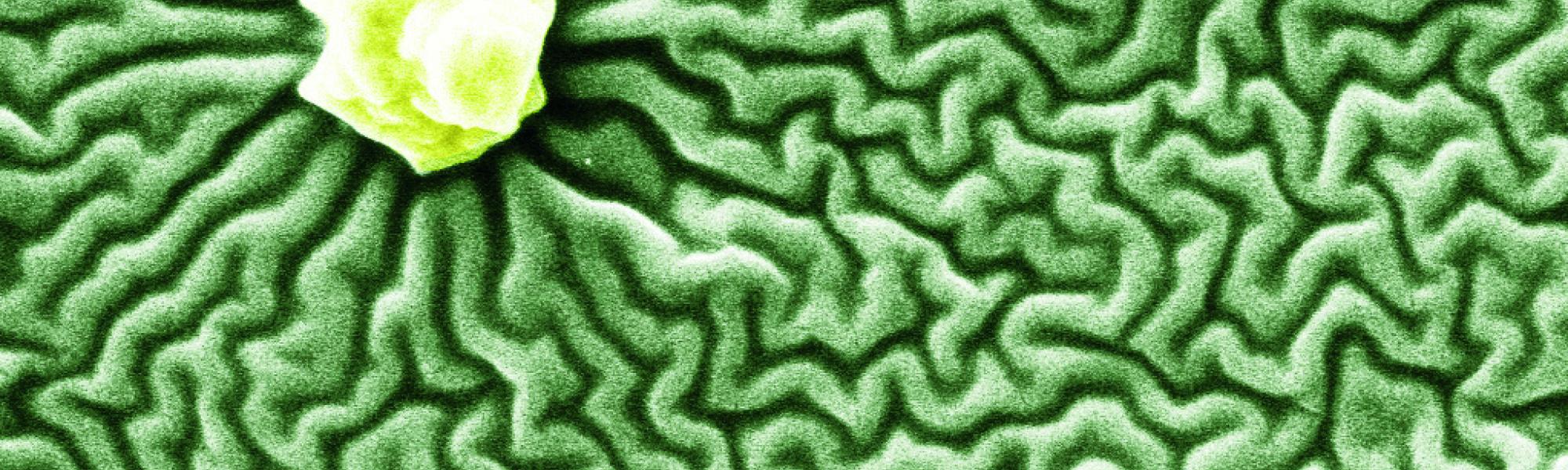
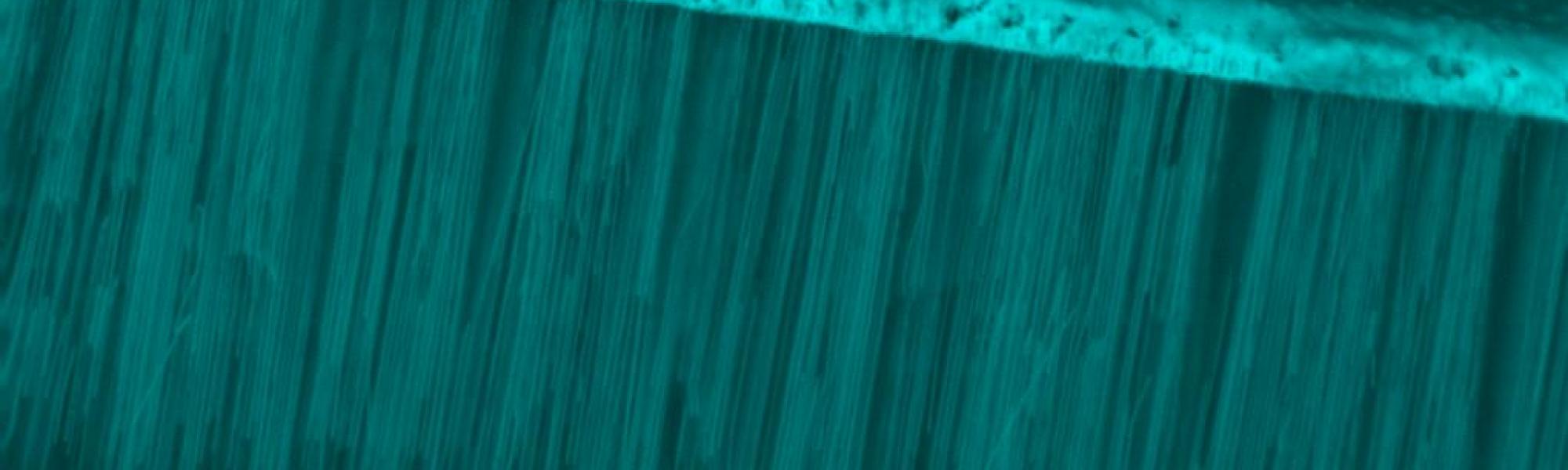
The work was accompanied by audiovisual projections created from real images obtained through electron microscopy, belonging to the Images of the Nanoworld project archive. These images allow us to observe nanometric structures invisible to the human eye, where matter reveals forms, textures, and patterns of surprising beauty.
The projections correspond to real materials under scientific study: magnetic nanostructures, metallic nanowires, surfaces with nanowrinkles, metallic oxides, and other materials with specific physical, chemical, and technological properties. Each image was artistically crafted by researchers at the center to bring this scientific discipline closer to audiences of all ages.
The Images of the Nanoworld project has given rise to traveling exhibitions, publications, and educational materials that have toured schools, universities, and public spaces, with the aim of bringing nanoscience closer to the public through an accessible, visual, and engaging language. In the Sky Concert, these images will take another step: they will interact with music in real time, translating the invisible into sound.
A cycle that crosses art, astronomy and science
The complete program for the Cielo 2025 Concert included:
- Astronomical Broker: inspired by big data technologies used to detect space events.
- Paranal: dedicated to the observatory of the same name and the challenges astronomy faces in the context of desert industrialization.
- Nanoworld: inspired by nanoscience and images of the nanoworld.
- Exomoon Portrait: the centerpiece of the series, dedicated to the YEMS Millennium Nucleus and the scientific milestone of obtaining the first direct image of an exomoon.
Music as a bridge to knowledge
For Pablo Ariel López, science communication is a lifelong passion: “I firmly believe that Chilean society has a great need for knowledge and culture. Music can be a bridge for the public to connect with the mysteries that science reveals to us with each discovery.”
He adds: “Composing for these kinds of events is a way to contribute, to build community, and to value the intersection of art and science, in a life marked by immediacy.”
- Log in to post comments