
The project “Development and Implementation of the Oral Epithelial Cell Culture Technique (COMET) for the Treatment of Patients with Bilateral Corneal Limbal Insufficiency,” led by Servicios Médicos Luis Pasteur S.A. with the participation of researchers from the Center for Nanoscience and Nanotechnology (CEDENNA) and the Faculty of Medicine of the University of Santiago, Chile (USACH), was awarded funding by CORFO through the Crea y Valida program.
The initiative aims to establish scientific and technical capabilities in Chile for the culture and transplantation of corneal limbal stem cells, which are responsible for regenerating the surface of the eye and restoring vision in patients affected by a devastating cause of blindness: stem cell deficiency, also known as totipotent or pluripotent stem cell deficiency. This little-known condition causes the progressive loss of corneal transparency, resulting in pain, photophobia, and blindness.
It is estimated that between 15% and 20% of corneal blindness worldwide is due to this cause, primarily affecting young people and those of working age. In Chile, specialists estimate that at least 6,000 people live with this condition without access to regenerative therapies, as the only treatment available to date is palliative.
The main causes include chemical burns—which account for up to 17% of eye injuries in the country—autoimmune diseases such as Stevens-Johnson syndrome, and congenital conditions such as aniridia, a rare eye disease characterized by the partial or total absence of the iris. Its impact is not only clinical: the WHO estimates that blindness generates losses of USD 411 billion annually worldwide due to decreased productivity and quality of life.
Contribution to national science
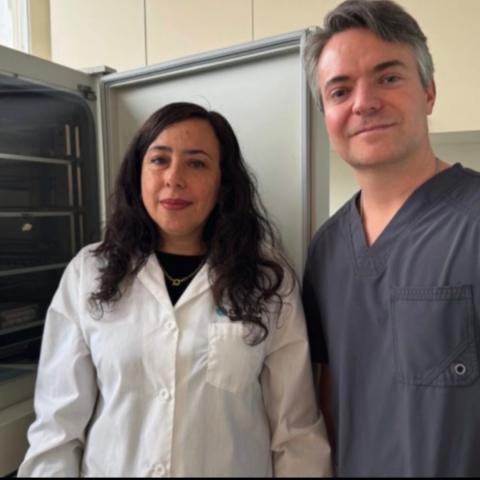
To address this gap, Doctors Osvaldo Berger (USACH) and Patricia Díaz (CEDENNA) are working on a groundbreaking solution in Chile: cultivating limbal corneal cells in the laboratory for later implantation in affected patients.
The initiative caught the attention of CORFO's "Crea y Valida" program, designed to support Chilean companies in the development and validation of innovative technological solutions with a focus on research and development (R&D), supporting projects from the prototype phase to technical and commercial validation.
Regarding the CEDENNA-USACH initiative, the researchers explain that they are working on cultivating limbal corneal cells, a specific area of the cornea responsible for maintaining transparency for proper vision.
“These cells are lost due to various situations, such as trauma or burns, and the body is unable to regenerate them on its own. Therefore, in the laboratory, we cultivate and multiply them so that we can later implant them in patients who have a deficiency of these cells,” explains ophthalmologist Osvaldo Berger.
Dr. Patricia Díaz, head researcher at the Nanobiomedicine Laboratory of CEDENNA, elaborates: “With Dr. Berger, we are standardizing cell cultures from the corneal limbus. These cells allow for corneal regeneration, and what we do is isolate them, select growth factors that optimize their proliferation, and thus generate samples that can be used for transplants in patients.”
The project is in the early stages of standardization, and it is expected that clinical application can begin next year. “Once we have well-differentiated samples, we can immediately begin applying them. There are many patients who have been waiting for this alternative for years,” adds Dr. Berger.
An innovation with an impact on public health
In countries like Japan, India, and Italy, similar techniques—such as COMET, based on the culture of autologous oral mucosal epithelial cells—have demonstrated clinical success rates exceeding 70%, allowing for the restoration of vision without the need for prolonged immunosuppression. However, in Chile, there is still no laboratory offering this type of treatment.
The CEDENNA–USACH initiative seeks precisely to establish this local capacity, generating standardized protocols and trained personnel to offer an effective alternative to those who currently only have palliative care options.
If successful, it would represent a historic advance in ocular regenerative medicine in Chile, with direct benefits for social inclusion, quality of life, and patient productivity.
This work is being carried out in collaboration with the Cornea Chile Foundation and the Pasteur Clinic, from which the cultured cells are obtained and which also serves as a training center for postgraduate residents. This collaborative work between institutions is what CORFO recognized when selecting them for co-financing.
“Collaboration between physicians and research centers is essential. Many of us doctors work in clinical practice and are not always aware of the opportunities offered by centers like CEDENNA and initiatives like ‘Crea y Valida’. This combination of factors allows us to move towards better healthcare in Chile,” concludes Dr. Berger.
- Log in to post comments